
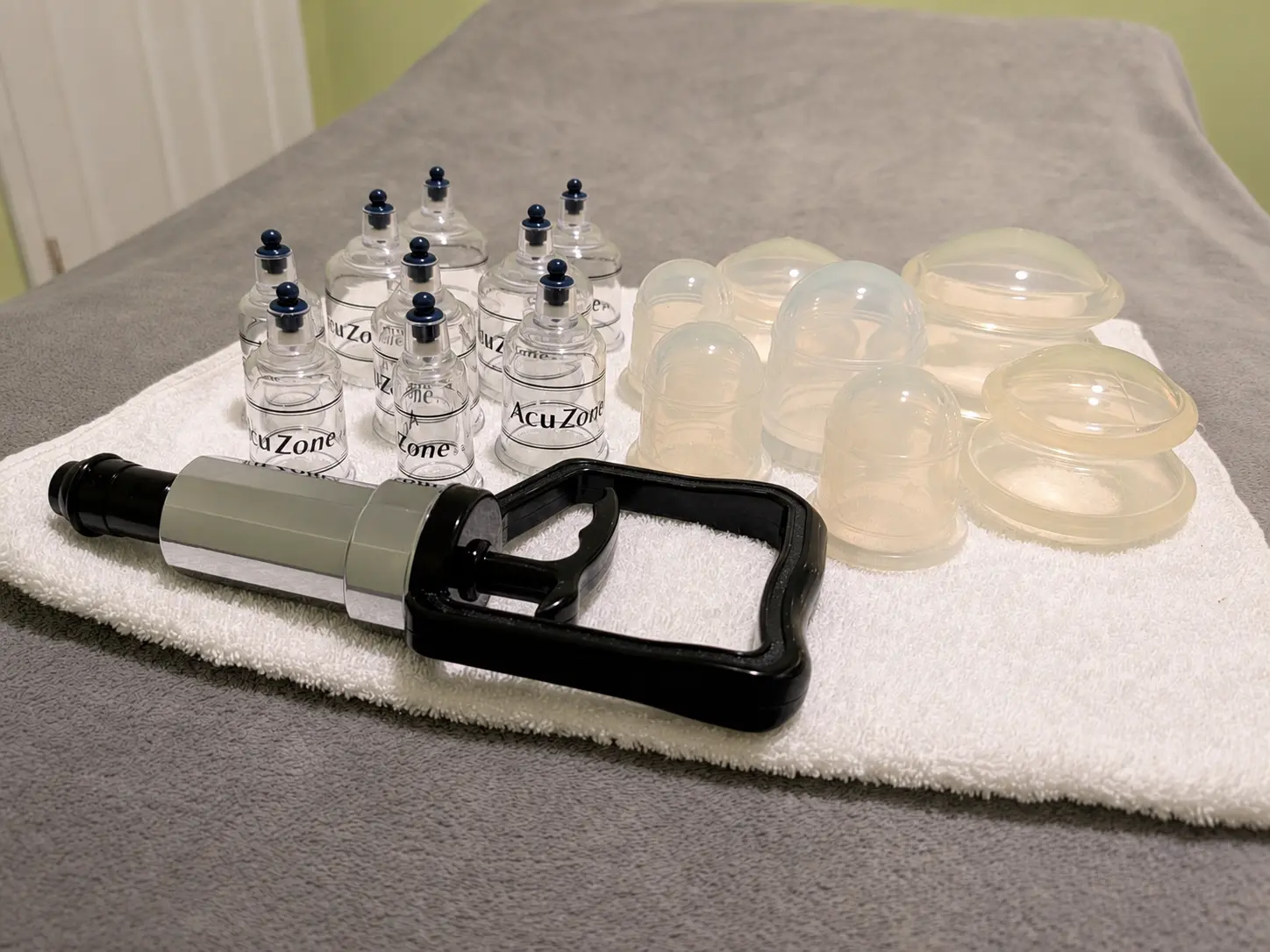
You may have seen athletes, gym members, or other people with distinctive circular marks on their shoulders or back. These temporary marks are often left by cupping therapy.
Cupping is a traditional practice in which a therapist places rigid or soft cups on the body and creates suction that lifts the skin and superficial underlying tissue. Unlike massage techniques that primarily apply downward pressure, cupping produces a lifting sensation and provides a different type of mechanical input.
At Healthy Body Massage, dry cupping may be incorporated into selected massage sessions at our Orlando and Vero Beach locations.
What Is Dry Cupping?
During dry cupping, a therapist places cups on specific areas of the body and creates negative pressure inside them.
The cups may remain in one position for a short period. This is known as stationary cupping. The therapist may also move the cups across the skin using a technique commonly called dynamic or moving cupping.
The method used depends on the therapist’s approach, the area being addressed, and the client’s comfort and preferences.
Dry cupping does not involve piercing the skin or drawing blood. This distinguishes it from wet cupping, which is a separate practice.
Cupping has a long history and has been used in traditional medicine in several parts of the world, including China and the Middle East. Today, it is also offered in many massage, wellness, and sports recovery settings.
Why Do People Add Cupping to a Massage?
People often choose cupping because they enjoy the lifting sensation or want to experience an approach that feels different from traditional massage pressure.
Research suggests that some forms of cupping may provide pain relief for some people with certain musculoskeletal concerns. Results vary according to the condition being studied, the type of cupping used, and the way the research was conducted.
Although some studies have reported promising results, the overall body of evidence remains limited and findings have not been consistent across every condition or cupping method. Cupping should therefore be viewed as an optional complementary wellness practice, not as a proven treatment or replacement for medical care.
Your massage therapist can explain how cupping might fit into your session based on your comfort, goals, health history, and the therapist’s professional judgment.
What Does Cupping Feel Like?
Cupping usually creates a pulling, tightening, or stretching sensation. Some people describe it as a feeling of pressure in the opposite direction from traditional massage.
The amount of suction can often be adjusted. The sensation should remain within your comfort level, and you should tell your therapist if it feels too intense, uncomfortable, or painful.
Some people enjoy the sensation immediately. Others need time to decide whether cupping is right for them. As with any massage technique, the experience varies from person to person.
You may request that the pressure be adjusted, that a cup be moved, or that cupping be stopped at any point during the session.
Does Cupping Leave Marks?
Cupping commonly leaves temporary circular marks caused by suction on the skin. These marks are not a reliable measure of toxins, treatment success, the severity of muscle tension, or how much a person benefited from the session.
The marks can vary in color, size, and duration. Some may be light pink or red, while others may appear darker. The appearance of the marks can differ between people and even between areas on the same person.
Your therapist can discuss what to expect before beginning cupping. This may be especially important if you have an upcoming event, plan to wear clothing that exposes the treated area, or are concerned about visible marks.
Cupping may also cause temporary tenderness, skin irritation, or bruising-like discoloration. Some marks may last longer than expected. Certain skin conditions may be aggravated by suction.
More serious complications, including persistent discoloration, burns, scarring, or infection, have been reported with some forms of cupping. Proper technique, sanitation, screening, and communication are important parts of reducing risk.
Tell your therapist about relevant health conditions, medications, skin sensitivities, recent injuries, previous reactions to cupping, and any other concerns before your session.
Is Cupping Right for Everyone?
Cupping is not appropriate for every person or every area of the body.
A therapist may modify or decline cupping based on your health history, medications, skin condition, current symptoms, recent injuries, or other safety considerations. Cups should not be placed over certain areas of irritated, injured, infected, or compromised skin.
Your therapist may also determine that another massage technique is more appropriate for the goals of your appointment.
Cupping is not a substitute for diagnosis or treatment from a licensed healthcare provider. Seek medical guidance for symptoms that are unexplained, severe, persistent, worsening, or associated with an injury or medical condition.
Cupping Massage in Orlando and Vero Beach
At Healthy Body Massage, dry cupping may be incorporated into some Deep-Tissue or Therapeutic massage sessions at our Orlando and Vero Beach locations.
Availability and suitability depend on the therapist, the type and length of the appointment, the areas being addressed, and your individual circumstances. Not every therapist or appointment will include cupping.
Cupping will only be used with your consent. Before beginning, your therapist will explain the process, discuss the possibility of temporary skin marks, and invite you to ask questions.
Communication continues throughout the session. You can request that the suction be adjusted or that cupping be stopped at any time.
Interested in learning whether dry cupping could be included in your next massage? Speak with your Healthy Body Massage therapist when scheduling your appointment or at the beginning of your session.
This article is provided for general educational purposes and does not constitute medical advice. Individual experiences and results vary. Cupping should not be used as a substitute for evaluation, diagnosis, or treatment by a qualified healthcare professional.
Sources
1. National Center for Complementary and Integrative Health: Cupping
2. The Effectiveness of Cupping Therapy on Low Back Pain
3. Evidence-Based and Adverse-Effects Analyses of Cupping Therapy in Musculoskeletal and Sports Rehabilitation
4. Federal Trade Commission: Health Products Compliance Guidance